


Target coordinates guide antenna movement, helping a narrow receiving beam follow the UAV during flight.

Version 1.0 and 2.0 support gives compatible telemetry projects a defined data path into the tracker.

The supply range and typical consumption below 15W support power planning for the receiving installation.

Xingkai reviews your requirements and quotes the FT300 configuration before you confirm the order.
Automatic Antenna Tracking for UAV Communication Projects
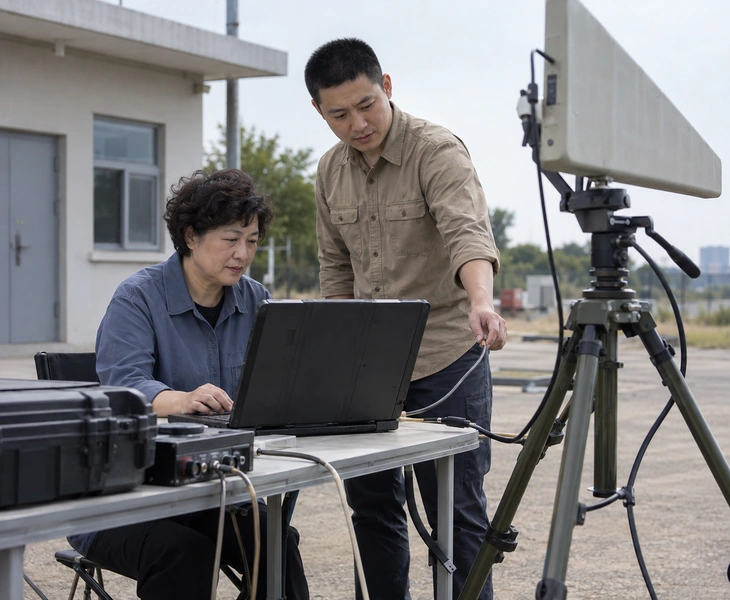
Xingkai supplies the XK-FT300 automatic antenna tracking PTZ system for UAV video and data-link projects. Using UAV latitude, longitude and altitude, it directs a receiving antenna toward the aircraft. For antennas with a narrow reception angle, automatic pointing helps maintain the antenna’s orientation toward the aircraft as its position changes.
The FT300 supports MAVLink V1.0 and V2.0 for projects with compatible telemetry output. Its data-input options also cover an analog video link with a GPS tracking module and a serial connection from an HD video transmission system, providing different integration routes for existing equipment.
We review your link type, position-data output, antenna requirements and quantity to confirm the FT300 configuration and provide a quotation. Antennas, supporting modules and accessories are agreed as part of the order configuration.
The XK-FT300 Antenna Tracker
Explore the FT300 for automatic antenna pointing within your UAV communication project. Xingkai reviews the required configuration for quotation.

Automatic antenna pointing for UAV video links, with position-data input and MAVLink support for projects using compatible telemetry equipment.
Motion and Power for Your Installation

A maximum pan speed of 300°/s helps compare the tracker with your required antenna turning rate.

A tilt range of −15° to 135° gives the elevation limits for your antenna arrangement.

The tracker operates at 12–16V DC with typical consumption below 15W; other equipment needs separate power budgeting.

The FT300 weighs 2.6kg, a useful input for planning the tracker’s mounting and transport.
Pointing Your Drone Tracking Antenna
High-gain receiving antennas have a narrow useful reception angle. The XK-FT300 uses a UAV’s coordinates and altitude to keep the receiving antenna directed toward that aircraft. It needs target position data; it is not a detector for finding nearby drones.
This makes automatic pointing relevant when your project depends on a directional receiving antenna. The FT300 handles pointing; your chosen radio link and antenna determine the rest of the receiving arrangement. Xingkai reviews that arrangement when preparing the FT300 configuration.

Plan the Link and the Tracker Together
An antenna tracker addresses direction within a UAV communication link. It does not establish a transmission distance on its own. Antenna gain, radio configuration and the path between aircraft and receiver remain part of the link design.
For a project with an existing video or data link, the practical starting point is its position-data output and intended receiving antenna. Xingkai reviews these requirements with the FT300 configuration so the quotation identifies the equipment being supplied and the order conditions.
Choose the Tracking Data Path for Your Link
For analog video-link projects, the FT300 uses a GPS tracking module on the UAV to send target information to the receiving side. This route carries position data with the analog downlink. Xingkai reviews the GPS module and other required equipment as part of the order configuration.
 View full-size image
If your HD video transmission system provides a suitable serial-data path, the FT300 can receive the UAV’s position data through that connection, using a GPS module on the aircraft. Xingkai reviews the proposed system and configuration before quoting. The serial path must carry the position data required for tracking.
 View full-size image
The FT300 supports MAVLink V1.0 and V2.0. In compatible flight-control and digital-radio telemetry projects, position data from the radio’s ground end is shared with the FT300. This provides a route through existing telemetry equipment. Xingkai reviews the output connection and order configuration before supply.
 View full-size image
RF Development and Product Supply from Xingkai
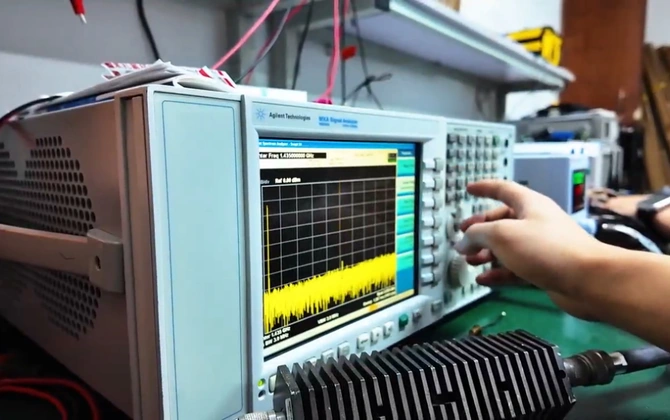

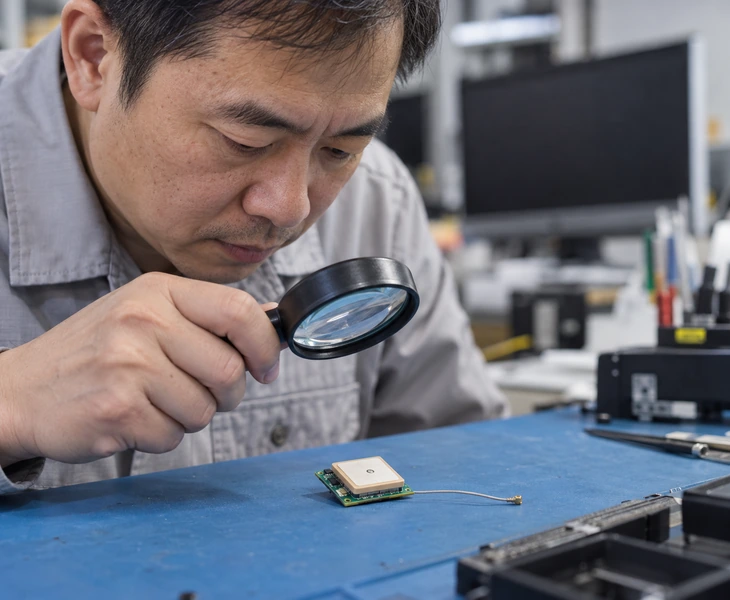
Xingkai develops and produces RF communication equipment and supplies related wireless products. Our technical focus covers RF communication, baseband units and image processing. Your quotation identifies the selected product model and included equipment, so the supply scope remains clear when the project also needs related hardware.
XK-FT300 Motion, Power and Data Requirements
Use these specifications to assess the tracker’s motion, power and data-input requirements.
- Technical Specifications
| Parameter | Specification |
|---|---|
| Maximum pan speed | 300°/s |
| Maximum tilt speed | 60°/s |
| Tilt range | −15° to 135° |
| FT300 weight | 2.6kg |
| Operating voltage | 12–16V DC |
| Typical power consumption | <15W |
| MAVLink support | V1.0 / V2.0 |
| Target data required | UAV latitude, longitude and altitude |
Weight does not establish the allowable antenna load. The required mounting arrangement, data connection and order configuration are reviewed separately.
The 2.6kg figure is the tracker weight; assess the weight of the complete installation separately.
From Your Requirements to FT300 Supply
Xingkai confirms the model configuration and order conditions before arranging supply.
Describe your UAV communication project, position-data output, intended antenna arrangement and required quantity. We use these requirements to begin the model and configuration review.
Xingkai checks the proposed model and configuration, then provides a quotation for the equipment and quantity under discussion.
Both parties confirm the configuration, quantity and delivery conditions. The confirmed order defines what is to be supplied.
Xingkai arranges supply and dispatch according to the confirmed order conditions.
FAQs: FT300 Configuration Questions
The version match alone is not enough to confirm the connection. The FT300 needs the UAV’s latitude, longitude and altitude through a suitable data output. Send Xingkai the flight controller and radio model details, together with the output connection information. We review these with the FT300 configuration before quoting, so the connection is agreed for the equipment in your project.
The antenna’s weight and dimensions, the proposed mounting arrangement and the equipment already at the receiving site are useful inputs for configuration review. The FT300’s 2.6kg weight is the tracker specification, not an antenna payload rating. Send these installation details with your enquiry so Xingkai can review the antenna arrangement alongside the requested FT300 configuration.
No. The FT300’s figure below 15W is typical consumption for the tracker, not a stated peak limit or a budget for the complete installation. Allow separately for the other equipment being powered, including the radio link and any supporting modules. Share the intended supply arrangement when requesting a configuration quotation; the FT300 operating range is 12–16V DC.
Agree the supplied equipment separately from the parts you already own. Tell Xingkai which radio link, receiving antenna and supporting hardware you plan to retain. During order confirmation, specify the tracker configuration and which antennas, GPS modules, mounting parts and cables are included in the supply. This gives both parties an agreed equipment scope without assuming a fixed accessory bundle.
Plan the Rest of Your UAV Communication System

Explore video and data-link equipment for your project, and review each model’s position-data output alongside the FT300 configuration.
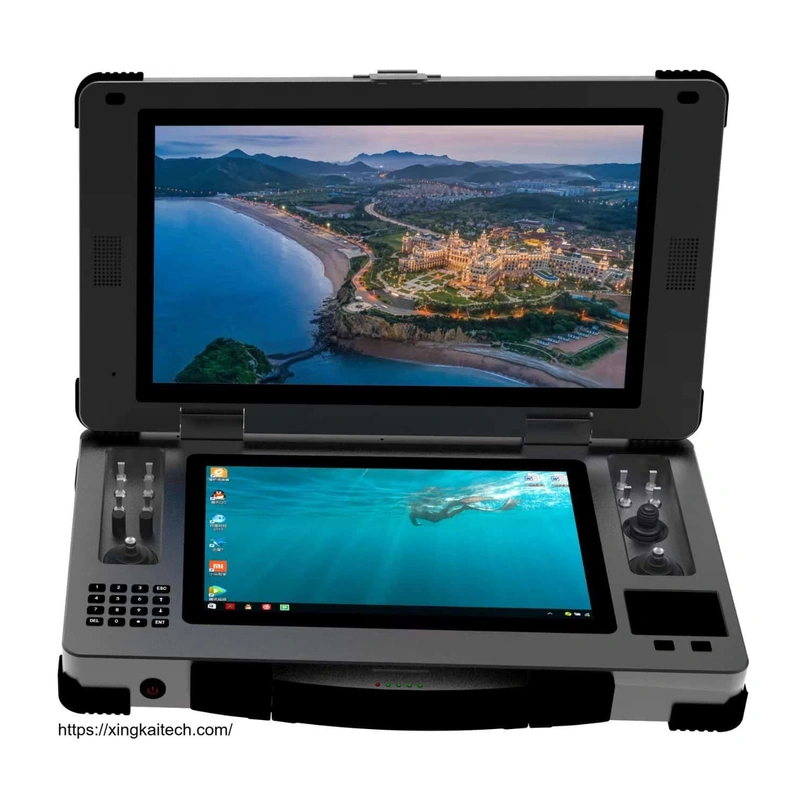
Review ground control hardware for your project’s control and receiving arrangement, with tracker data and power considered during configuration.

Review Mesh radio models for wireless networking requirements, keeping radio configuration, serial data and tracker input compatibility as separate considerations.

Consider COFDM equipment for video transmission and define how target position data will reach the FT300 alongside the video link.
Get an FT300 Configuration Quote
Tell us about your UAV video or data link and how it outputs target position data. Include the intended antenna arrangement and required quantity. Xingkai will review the requirements, confirm the proposed FT300 configuration and provide a quotation.

