
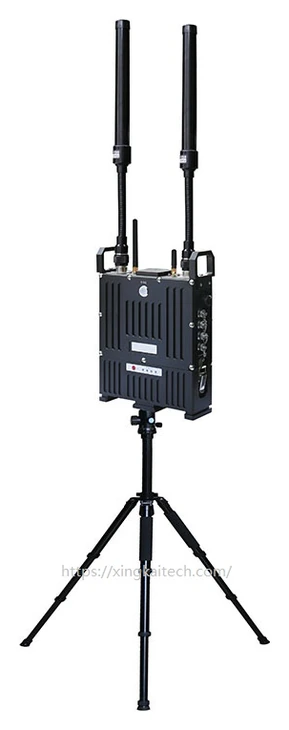
XK-V103TE Manpack and Airborne Mesh Radio
XK-V103TE is a manpack and airborne mesh radio for companies connecting mobile equipment through a distributed network. It combines automatic relay with network, TTL and PTT connections for data and voice tasks across deployed nodes.
- Automatic relay and multi-hop mesh operation support a distributed network of portable or installed nodes.
- Network, TTL and PTT connections link data and voice equipment to the selected radio arrangement.
- The listed 1400–1485 MHz MIMO 2×2 configuration uses AES128 and adjustable 2 / 5 / 10 / 20 / 40 MHz bandwidth.
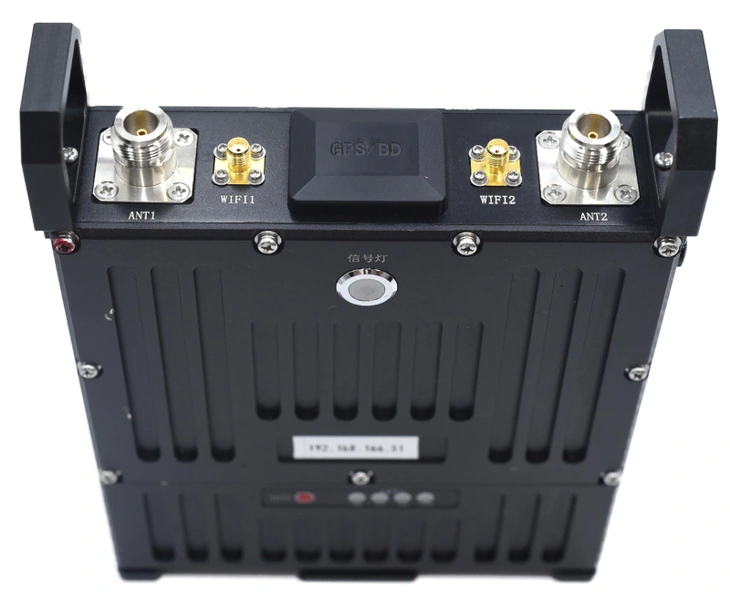
- Two N mesh RF connectors and two SMA Wi-Fi connectors provide defined antenna connection types for accessory selection.
Shown antennas and tripod are specified in the quotation.
XK-V103TE Manpack and Airborne Mesh Radio Overview
XK-V103TE provides a mesh node for manpack or airborne installations that need to carry network data and voice traffic between mobile points. Automatic relay and multi-hop networking allow the node to form part of a distributed layout without assigning all traffic to a central mesh base station.
The listed radio configuration operates at 1400–1485 MHz and provides network, TTL, charging, PTT and expansion connections. Its MESH and Wi-Fi antenna connectors are listed separately, helping distinguish the radio antenna arrangement from the connected equipment. Web and MESH-platform management support configuration of the radio network.
Xingkai specifies the radio and accessories around the terminal connections, deployment layout and required quantities. A shown installation may include antennas or a support stand; the quotation identifies what is supplied. Confirm the power and connection arrangement for the selected version before ordering or using an existing harness.
Technical Specifications
Listed 1400–1485 MHz configuration. Power arrangement, antenna equipment and mounting accessories are specified for the supplied version.
| Parameter | Listed configuration |
|---|---|
| Form | Manpack and airborne mesh radio |
| Networking frequency | 1400–1485 MHz; listed configuration |
| RF table entry | 36 dBm; 4 W MIMO 2×2 configuration |
| Encryption | AES128 |
| Channel bandwidth | 2 / 5 / 10 / 20 / 40 MHz; adjustable |
| Wi-Fi hotspot | 2.4 GHz |
| Average device consumption | 12 W; listed average, not a maximum load rating |
| Mesh RF connectors | 2 × N |
| Wi-Fi connectors | 2 × SMA |
| Connections | Network, TTL, charging, PTT and expansion port |
| Management | Web and MESH management platform |
| Networking | Mesh ad-hoc network; automatic relay and multi-hop |
Connections and Integration
Product appearance reference; antennas and mounting accessories for the supplied configuration are specified in the quotation.
Network connections carry IP traffic, TTL serves the specified serial terminal and PTT supports the selected voice arrangement. The listed RF connections are two N connectors for mesh and two SMA connectors for Wi-Fi.
Xingkai checks the required terminals, antenna arrangement and radio quantities when preparing the configuration quotation. The expansion port must be specified for the intended device; its name alone does not establish a particular protocol or plug-and-play compatibility.
Configure and Order Your Radio
Select the V103TE deployment form and terminal arrangement before agreeing the radio package. The quotation distinguishes manpack equipment from the accessories required for a platform installation.
State whether each V103TE is for manpack or airborne use, with network/TTL terminals, PTT requirements, any expansion-port device and quantities. Identify the two N mesh and two SMA Wi-Fi antenna paths and the proposed power arrangement.
Xingkai checks the supplied V103TE form, terminal connections and applicable electrical specification, then quotes the selected antenna, voice and mounting accessories. The 12 W average entry does not establish the supply limits; confirm the power arrangement for that version before selecting its source.
Agree on the supplied configuration, quantities and delivery terms before proceeding.
Xingkai supplies and ships according to the confirmed order.
FAQs
Identify which equipment must move between the two roles and which will remain in each installation. Ask for a separate mounting, antenna-cable and power/accessory list for each arrangement, with the supplied radio hardware identified. The V103TE form description does not establish that one assembled kit transfers unchanged between a carried setup and an aircraft. Confirm whether the quotation covers one radio with separately specified accessories or dedicated nodes for the two roles.
Provide the available supply and the cable connector and pin assignment for the installed platform. The listed average consumption does not establish the input-voltage limits or a compatible harness for every version. Xingkai checks the power and connection arrangement when specifying the radio configuration. Use the supplied version’s electrical information before connecting an existing power cable.
The expansion-port entry does not by itself identify the signal type, electrical levels or software interface for your payload. Send the payload model and connection specification with the enquiry. Xingkai checks the proposed arrangement and identifies any required cable or interface equipment in the quotation. Compatibility must be verified for that specific payload and radio configuration.
Matching a frequency label alone is insufficient. Provide the full model numbers, hardware and firmware versions and intended network settings for the radios you want to combine. Xingkai checks the proposed configuration before quoting additional units. Confirm interoperability for the selected devices; neither a shared MIMO label nor a similar product name establishes mixed-model operation.
A relay can change the path between nodes, but it does not by itself guarantee a video link or its capacity. Provide the proposed relay locations, antenna heights, obstructions and video load. Xingkai uses those conditions when checking the radio configuration. Assess the complete layout rather than multiplying a general distance figure by the number of nodes.
Compare Related Models

Black 2 W × 2 airborne configuration with a DB15 connection record.
Black enclosure reference; supplied version is specified in the quotation.

Compare the 5 W × 2 airborne radio configuration and confirm the supplied interface and connector arrangement.
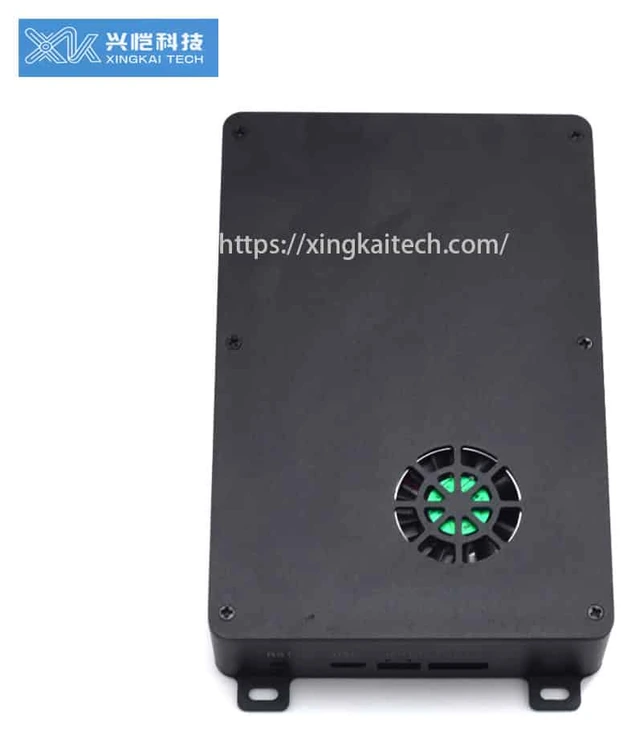
Airborne configuration with Ethernet, serial and SBUS control connections.
Exterior reference; supplied interfaces are specified in the quotation.

Request a Configuration Quote for XK-V103TE
Tell us which equipment and nodes your XK-V103TE network needs to connect. Include the operating band, terminal interfaces, power arrangement and required radio quantities. Xingkai will check the configuration and provide a quotation identifying the radio units and accessories.