
XK-F305KE Wireless Video and Data Link
For a platform with several network and control devices, XK-F305KE brings their traffic onto one 24 V wireless link. Its listed 1.4 GHz configuration combines up to three network ports, three serial ports and one SBUS connection, allowing video, telemetry and remote-control equipment to be planned together.
- Network traffic, UART (TTL/RS232) data and SBUS control can share the wireless link, with connections selected for your terminals.
- Point-to-point and point-to-multipoint relay modes support different link layouts as your project requires.
- 20–28 V DC input, nominal 24 V; power consumption is ≤32 W at 40 dBm RF output, giving you a defined condition for sizing the power supply.
- 125 × 120 × 30 mm and device weight ≤470 g provide the dimensions and equipment weight to check against your installation.
Listed 1.4 GHz configuration. The quotation identifies the supplied radio units, antennas and cables.
XK-F305KE Wireless Video and Data Link Overview
XK-F305KE brings network traffic, flight-control data, PTZ control and remote-control data onto one wireless link. Network, UART and SBUS connections let you build the link around the equipment selected for your project.
The listed configuration uses a nominal 24 V supply within a 20–28 V DC input range. Its power-consumption rating is ≤32 W at 40 dBm RF output: use that condition when checking your available power supply, rather than treating the RF-output figure as the electrical load.
Xingkai checks your terminal interfaces and intended link layout, then specifies the radio units and accessories in a configuration quotation. Confirm the supplied configuration, unit quantities and delivery terms before ordering. The specifications below give the listed mechanical and electrical conditions for that selection.
Technical Specifications
This table describes the listed 1.4 GHz configuration. Antenna gains are configuration references; the quotation identifies the radio units, antennas and cables supplied.
| Parameter | Listed configuration |
|---|---|
| Frequency range | 1420–1530 MHz |
| RF output power | ≤40 dBm, adjustable |
| Power input | 20–28 V DC; nominal 24 V |
| Power consumption | ≤32 W at 40 dBm RF output |
| Radio dimensions | 125 × 120 × 30 mm |
| Device weight | ≤470 g |
| Antenna references | Air unit: 3.5 dBi; ground unit: 12 or 16 dBi |
| Channel bandwidth | 3 / 5 / 10 / 20 MHz |
| Modulation | OFDM |
| Data/control interfaces | UART (TTL/RS232), SBUS |
| Communication protocol | IEEE 802.3; transparent serial data |
| Link modes | Point-to-point; point-to-multipoint relay |
| Rated operating temperature | −30 to +60 °C |
| Rated storage temperature | −40 to +75 °C |
| Security and channel operation | AES128 encryption; adaptive frequency hopping |
Connect Multiple Devices to One Ground Link
F305KE supports up to three network ports, three serial ports and one SBUS connection. Network video, flight-control telemetry and remote-control data can therefore use the same wireless link, with the ground station exchanging data through serial connections or UDP/TCP over the network interface.
This gives projects with several connected devices a defined interface arrangement to plan around. Match UART as TTL or RS232, and provide the listed 20–28 V DC supply for the radio installation.

Configure the F305KE Air and Ground Units
Build the order around the listed 1420–1530 MHz configuration, the required network and control connections, and the air-to-ground layout. The quotation identifies the F305KE units, selected antennas and cables; video encoding or viewing equipment is scoped separately when needed.
Send the network-video sources and their bitrates, serial and SBUS requirements, and the available DC supply. Show the platforms and ground station in the intended link layout.
Xingkai checks the 1420–1530 MHz requirement, interface allocation and link layout, then quotes the air and ground units with the proposed antenna and cable scope.
Agree the F305KE endpoint quantities, frequency configuration and accessory list. Confirm the selected ground-side antenna and delivery terms before placing the order.
Xingkai supplies and ships the specified F305KE units and accessories according to the confirmed order.
FAQs
Its output first needs a separately specified network-video encoding arrangement. Network video then enters the air-side radio, and the ground side passes network data to the receiving equipment. Identify the camera output and the ground-side decoder or viewing system together, so the quotation distinguishes the radio link from the extra video equipment. The listed network, UART and SBUS connections do not establish direct HDMI or SDI input.
Show which platforms must exchange data and where the additional air unit will sit in the intended point-to-multipoint or relay layout. Include the installed units’ frequency settings within the listed 1420–1530 MHz configuration, channel bandwidth, and hardware and firmware versions. Xingkai can then check the proposed unit roles and quote the addition. Adding a unit is a configuration decision; the product description does not establish an unrestricted node count.
Treat them as alternative configuration references, alongside the catalogue’s 3.5 dBi air-side entry. Send the route, required distance, antenna mounting heights and line-of-sight conditions so the proposed antennas can be identified in the quotation. Include the available 24 V supply and the intended RF-output setting when describing the installation. The gain figures alone do not choose the right antenna or establish a guaranteed operating distance.
The listed F305KE input is 20–28 V DC, so 12 V is outside that range. If you retain this radio, the platform needs a suitable supply arrangement with output within the specified range; any converter is a separate item unless included in the quotation. Account for the listed ≤32 W consumption at 40 dBm RF output, plus losses in your chosen supply arrangement, when assessing that option.
No separate wireless capacity is stated for each port. The F305KE description supports simultaneous transmission from up to three network ports, while video, serial data and control traffic use the radio link. Provide the number of video sources and their configured bitrates together with the telemetry and control requirements. This lets the proposed configuration be considered as one traffic load, rather than treating each network connection as an additional radio link.
Compare Related Models

Compare the listed 115 × 92 × 28 mm footprint and ≤300 g device weight when assessing another video and data link.
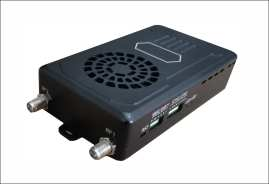
Consider its listed 102 × 58 × 24 mm footprint and ≤130 g device weight where installation space and equipment weight guide selection.
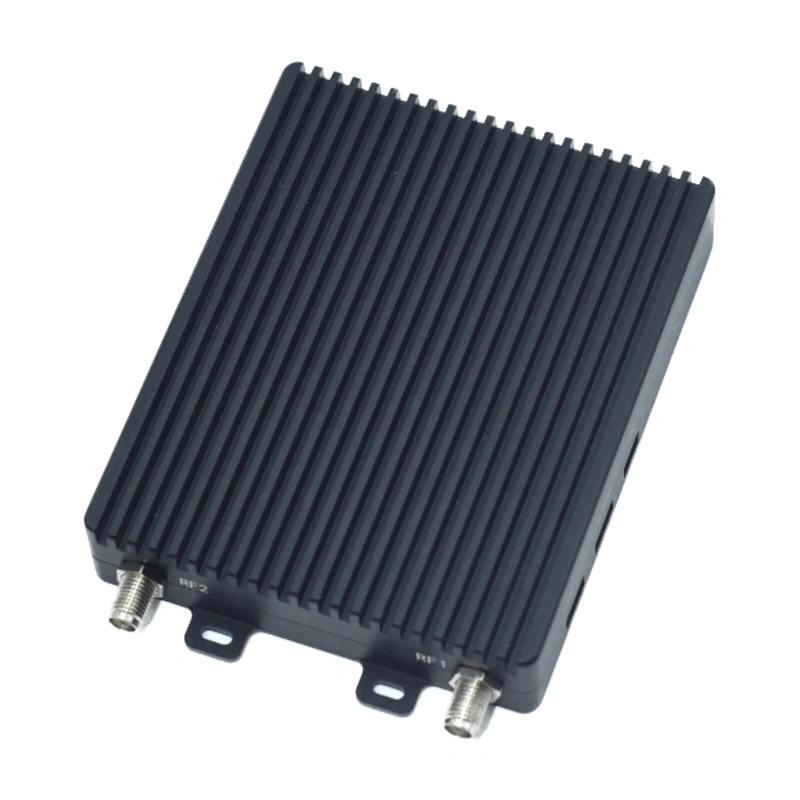
Compare the listed 96 × 78 × 19 mm device and ≤190 g weight alongside its interface and power requirements.

Compare the air-unit and ground-unit power requirements for the quoted version when assessing another video and data link.
Request a Configuration Quote for XK-F305KE
Connecting several video and control devices on a 24 V platform? Send a simple equipment layout and tell us which connections it needs. Xingkai will check the F305KE configuration and provide a quotation for the proposed radio link.